Thursday, April 26, 2007

My Desk Buddies


Meet The New Guy.

This is Moon. (Okay, so it‘s not really him, but my camera isn’t working at the moment so this is as close to him as I can get. Will replace with his real photo as soon as I'm able.) He’s a young Double Ray (DR) Crowntail Betta and a real looker.


Meet The Old Guy.

Moon shares my writing desk (not a tank of course) with my two-year old Mystic Half-Moon Butterfly Betta (the name is longer than the darn fish!) named, of course, Mystic.

Pretty yes? You bet. But before you go rushing out to get a desk buddy Betta of your very own, please, please, please do your research. These fish are not ornaments, nor should they ever be used for our amusement or entertainment. They are living things, and to own one means to be responsible for it.

Respect all life. If not, please leave Bettas (and all future pets) to those who will respect them.

There are a million Betta sites out there, but I’ve found the following to be the most helpful:

BettaCentral
Betta Cave
Betta Talk
Tropical Fish Forums
Betta House
Betta Groups

Thursday, April 19, 2007

Roots

Yes, even I have roots. And now I'm going to trip over them while going down memory lane. In other words, this is my old home town of Portage La Prairie, Manitoba.

Enjoy.


Author Note: My sincere apologies for posting the photos of my old home town. When sent to me I didn't realize they were not owned by the party who sent them. Therefore, they have been removed.

Again, my apologies.

Wednesday, April 18, 2007

Virginia Tech


Pictured: 8 pm Candlelight Vigil on the Drillfield

My thoughts and prayers are with the families and all the victims of the Virginia Tech tragedy.

April 16th Memorial Website

Virginia Tech expresses its shock and profound sorrow regarding the tragic campus shootings of April 16, 2007. To honor and remember the victims, the above website has been created so those within the university community and around the world may share condolences, thoughts, and prayers.

Saturday, April 07, 2007

LiteraryMary

Now you know I don’t usually recommend writing forums on The View, but this is one the exception. Introducing:—


Just a few of this forums super features include:

* An excellent and very approachable staff.
* Mad-skills-talented members from beginners to the published.
* Enough threads for writers of all walks, tastes and genres (including an Erotica thread which is age restricted and viewable by members only, and a *Secret Bonus Track* thread which is another members only thread similar to a Workshop—meaning first rights are protected in both Erotica and Bonus threads).
* A monthly newsletter.
* Seasonal Featured Work—the crème de la crème as chosen by the members in the categories of Poetry, Fiction, and Erotica).

If you write or are an avid reader and haven’t yet checked out LiteraryMary, I urge you to do so. And tell 'em I sent ya.

Sunday, April 01, 2007

For All You Writers Out There:

Here's something cute for you. A kind of little engine that could sort of thing, that may lift your spirits a bit and hopefully inspire you.

Love and hugs.

Friday, March 30, 2007

Pet Food Recall List and More

I am an animal lover and proud owner of a sweet Golden Retriever, two cats and two horses. For those of you who haven‘t been keeping up with the latest and don't know where to get information, here are a few helpful links:

Pet Food Recall List
(Scroll down for the list of brand names.) Note: PETA is also calling for the recall of dry pet foods from these same brand names.

PETA
(People for the Ethical Treatment of Animals)

WWF
(World Wildlife Foundation)


I myself am a proud sponsor of WWF. For your convenience, the above three links will be permanently included in my Help List.

Thursday, March 29, 2007

Lil Chuckle


In the hospital the relatives gathered in the waiting room, where their family member lay gravely ill. Finally, the doctor came in looking tired and somber.

"I'm afraid I'm the bearer of bad news," he said as he surveyed the worried faces. "The only hope left for your loved one at this time is a brain transplant. It's an experimental procedure, very risky but it is the only hope.

Insurance will cover the procedure, but you will have to pay for the brain yourselves.."

The family members sat silent as they absorbed the news. After a great length of time, someone asked, "Well, how much does a brain cost?"

The doctor quickly responded, "$5,000 for a male brain, and $200 for a female brain."

The moment turned awkward. Men in the room tried not to smile, avoiding eye contact with the women, but some actually smirked.

A man unable to control his curiosity, blurted out the question everyone wanted to ask, "Why is the male brain so much more?"

The doctor smiled at the childish innocence and explained to the entire group, "It's just standard pricing procedure. We have to mark down the price of the female brains, because they've actually been used."

Friday, March 23, 2007

*GROAN*


Say it ain't so. Say WF isn't down again.

Honestly, this is getting ridiculous.


*

It’s back. So, was that a mini sequel, or precursor?

Monday, February 19, 2007

Who, me?


Ruling Planet: Mercury
Quality: Mutable
Element: Earth

Short Summary

Virgo's are one of the most misunderstood signs of the zodiac. People think they're fussy, critical bad tempered and picky but that's only because they want everything to be perfect. This is the sign of cleanliness, although lots of Virgo's have the grottiest bedrooms and hang their clothes on the floor. They're extremely inquisitive and have a dreadful time trying to relax. Virgo's make fantastic friends. If a minor crises pops up you can be sure the Virgo will have everything under control in 30 seconds. They are always on the move because they like to learn as much as they can before they take off again. They excel at work so they probably get all the boring jobs (the ones Leo wouldn't be seen dead doing)


Long Summary

Virgo's are highly intelligent, interested in everything and everyone and happy to be busy with many jobs and hobbies. Many have some kind of specialized knowledge and most are good with their hands. Their nit-picking ways can infuriate their colleagues. They find it hard to discuss their innermost feelings and this can make them hard to understand. In many ways, they are happier doing something practical than dealing with relationships. These people can overdo the self-sacrificial bit and make themselves martyrs to other people's impractical lifestyles. They are willing to fit in with whatever is going on and they can adjust to most things, but they mustn't neglect their own needs. Although excellent communicators and wonderfully witty conversationalists, Virgo's prefer to express their deepest feelings by actions rather than words. Most avoid touching all but very close friends and family members and they find lovey-dovey behavior embarrassing. These people can be very highly sexed and they may use this as a way of expressing love. Virgo's are criticized a good deal as children and are often made to feel unwelcome in their childhood homes. They in turn become very critical of others and they can use this in order to wound.

Many Virgo's overcome inhibitions by taking up acting, music, cookery or sports. Acting is particularly common to this sign because it allows them to put aside their fears and take on the mantle of someone quite different. They are shy and slow to make friends but when they do accept someone, they are the loyalist, gentlest and kindest of companions. They are great company and have a wonderful sense of humor.

Perfect Partners: Taurus, Capricorn
Nearly Perfect Partners: Cancer, Scorpio
Like Minded Souls: Virgo
Opposites You're Attracted To: Aries, Aquarius
Learn From Your Differences: Leo, Libra
Not Your Destiny: Gemini, Sagittarius
Astrological Hell: Pisces

And you are?

Check it out at:

Kelly’s Star Signs

Sunday, February 18, 2007

Hello, Hal.

Novels and movies such as A Space Odyssey and I, Robot have made cynicism of robotics second nature, the water-cooler thought that robots will attack humans and take over the world a collectively held view with nary a shrug.

And speaking of sci-fi and cutting edge technology (weren‘t we?), here’s something I saw on the news today that has the potential to change lives, not to mention likely has the bazillion-dollar wheelchair and scooter industry quaking on their rims. The potential here is staggering. I can only imagine what it could mean for the bed bound, the paraplegic, and the disabled. And this is only the beginning. Surely future prototypes will be smaller and so easily hidden beneath clothes. And at $20,000 a pop? I don’t think it’s an unreasonable amount when compared to scooters and hydraulic van lifts and retrofitting homes and businesses to be wheelchair or scooter accessible, etc, etc. It could even, perhaps, be subsidized (or even partially subsidized) by the government. I mean, really, think of the workforce it could regenerate. Think of the possibilities. Think of the human aspect. Please.


Now compare that to the UC Berkeley Exoskeleton video below. Note the huge differences in bulk, size, weight, obvious strain on the wearer, and aesthetics.


Amazing. Simply amazing.

When I was a teen I had a friend in a boy whose name I’ll leave out for privacy sake. He was a sweet, wonderful person from a loving family who had everything going for him.

Life doesn’t blindside you when you seem to be standing still. No, life blindsides you when you’re heady and you’re happy and you let your guard down, just once.

This proves something. That maybe there’s a plan, though it’s hard to see or understand, if ever. That maybe we need to go down certain roads, forced down them if needs be, to see what we’re made of. That maybe when you let your guard down, you leave yourself open for some crazy-ass football player to blindside you. That was more or less what happened to a friend of mine as he crossed the train tracks beside the overpass on graduation night. It came in the form of a right front tire that drifted off the pavement and struck the full rail, his car coming to a stop on its roof. As you can imagine, it was a long and slow road to recovery—one full of unfathomable pain and depression.

Now years later, and he has overcome so much. He’s married (though he bet good money that would never happen) and a family man (though the doctors said it was impossible). Best of all, he’s again that sweet, wonderful person from a loving family who has everything going for him... but one. He’d like to someday walk with his children. It’s for him, and people like him, that I hope this suit succeeds.

Sunday, February 11, 2007

Why Canadians Are So Tired

(Thanks for sending this, Val.)


No wonder we're so tired!

The population of Canadais 30 million.
11 million are retired, that leaves 19 million to do the work.
There are 5.5 million in school, which leaves 13.5 million to do
the work.

Of this there are 3 million employed by the federal government,
leaving 10.5 million to do the work.

1 million are in the armed forces, preoccupied with killing
Terrorists, which leaves 9.5 million to do the work.

Take from that total the 7 million people who work for Provincial
and city Governments, and that leaves 2.5 million to do the work.

At any given time, there are 476,000 people in hospitals, leaving
2,024,000 to do the work.

Now, there are 1,211,998 people in prisons and 812,000 on Employment
Insurance and Welfare.

That leaves just two people to do the work.

You and me.

And there you are sitting on your ass, at your computer, reading
jokes.

Nice.

Real nice.

Thursday, February 08, 2007

A Change Will Do You Good

First, my apologies for neglecting to post for the last little while. I promise to do better in the future. In fact, I’m currently at work on the next installment of To Write and will post it Monday (hopefully). Second, no doubt you’ve noticed the header change at the top. Like the song by the same name says: a change will do you good. And it did. Hope you like.

Speaking of changes, I’ve changed my style, my mind, my opinion, my stand, my hairstyle, my pen name, my clothes and just about everything else over the years, including my car.

The first car I ever owned was a Plymouth Satellite Sebring Plus V8. She was metallic black with white pin striping and white leather interior (oh baby!) and was used—sure—but so little she was mint. I loved that car. Babied that car. Washed it and waxed it and vacuumed it and was one of those annoying drivers who parked sideways to avoid dings… and when my mom wanted a New Yorker, I reluctantly traded it. So what happened to her? The guy that bought her jacked up the back, slapped on some mags, and ended up rolling and totaling her within a month. Damn shame, that.

Then there was my dad, who use to practically live by the old saying: “If there’s a will, there’s a way.” To understand how this ties into the change theme here, this was a man who installed mom’s brand new dishwasher before dishwashers were installable. I remember standing in the basement holding this and that water pipe while he soldered them together, proud as all-get-out that he’d asked me to help him do something professional plumbers swore up and down could not be done. Of course after it was, they came to the house in droves, looked it all over, and then went about making a fortune while he received none of the credit. Kind of the same way he blueprinted the first snowplow to fit train engines in the yards because he was tired of taking men away from their tasks to shovel the tracks by hand (he was a car inspector with the railway back then, checking cars for hot wheels, etc., and ordering them off the track when they weren’t A-1). It didn’t matter to dad that he wasn’t recognized for it, only that having it made everyone’s job that much easier. (I don't come from stupid people, just modest ones. *grin*)

Not that a new header is on the same par with my dad’s achievements, nor will it make my job easier. I just like it. And who knows? It could be the start of something better.

Tuesday, January 09, 2007

I interrupt this blog for a very important question...

*
*

WF, WHERE ARE YOU?


Now, back to my regularly scheduled blog.


***Update: WF is now back online.***


*
*

Monday, January 08, 2007

Augment - By Chris Miller

Certain things in life are private, personal, and not open to sharing: bank account statements, take-home pay stubs, sexual exploits (or lack thereof), journals/blogs. But when Chris Miller (see My Must Reads—Blogs from the War Room) mentioned writing "not a rebuttal, but something to augment [my To Write post]" I insisted on putting it up here, in its entirety and without comment. So with thanks (again), here's Chris:

~

Just received my two complimentary copies of Cosmos—The Science of Everything in the mail, and seen, for the first time, a story of mine in a commercial publication. What a rush. They did a fantastic job—commissioned Tristan Schane to do this amazing 12x24 oil painting for it, which she told me took her 3 weeks including research and thinking. Even got my name at the bottom of the cover: FICTION BY CHRISTOPHER K. MILLER & LIZ MARTIN. And now I’m thinking Liz wishes her parents had given her a longer name.

Yeah I’ll crash and fade into reality soon enough. But this morning I’m feeling pretty professional and swell. Tallying up my income from the last two years of writing I see I’ve earned 800 + 75 + 10 + 10 + 10 dollars, less Paypal deductions and one three-dollar entry fee. So I’ve earned 905 dollars in two years, mostly in US funds, but also one Amazon gift certificate. That’s over 25 cents an hour probably… or maybe not… but it still qualifies me as a pro, and so it’s from this lofty perch that I now share everything I think I’ve learned about creative writing.

Instead of just enumerating all the “mistakes” I see beginners make on the forums over and over and saying “don’t do that,” I’m going to look at these as part of a growth process, an important stage in each person’s development as a writer. I’m pretty sure every new writer fantasizes about popular acclaim and financial success. I know I do. But the real underlying reason I write is to remember, think and feel. To grow. Writing puts me in touch with my memories, thoughts and emotions. It exercises my imagination. Also, as the owner of a pretty annoying obsessive-compulsive personality, I’ve wrestled a few addictions in my life. I know a thing or two about addiction. Writing is a heady drug.

This brings me to my first (and also last) stage of writing:


Self Gratification

Writing is like sex. For most of us, our first experience probably does not involve anyone else. My first character is based on me. He has my views and opinions. In fact, initially, all he does is expound my views and opine my opinions. Later, I will introduce other characters to rescue, kill, hang out or have sex with—depending on my mood. If I like to drink, I’ll drink a lot. If I like to make out, I’ll do that.

Of course I will not begin by just blurting out, “I got drunk and Mary let me feel her breasts.” I am a literary writer. Mood and setting are important. Preparation is important. As a literary writer, I am very concerned with choosing, not just the right words, but as many of them as possible. I will make sure that every noun has a weighty adjective or two in front of it and that for every verb there is an adverb. I will expand my vocabulary. I will clarify everything. The sun will not merely set into the pines. Oh, no. The crimson orb of the smoldering globular sun will plummet into the towering verdant trees of the ominous dark forest like a double-banked three-ball dropping into the side pocket. See how much better that is, especially the part about the three-ball, because I like to play pool too. I will have depth. I will explain that my feelings for Mary reach right down to the very core of my essence. I will try to use the words “shards” and “soul” in connection with this if I can. Probably I will try to work in a moral lesson too so that if my mom reads it she’ll see how mature and wise and sensitive I’ve turned out. Then I’ll feel her tits (Mary’s, not my mom’s). Then I’ll jerk off. There’s nothing wrong with the self gratification stage of writing. Many popular authors never leave it. And, no matter how much I evolve as a writer, it will always be a part of my work. Just as we as humans still contain elements of the life forms from which we evolved.


Sympathy

I’m still using too many adjectives and mixing up its and it’s, and your and you’re. Maybe my quote tag punctuation’s still a little screwy. But I’ve started to twig that others do not enjoy reading my work as much as I or my mom do. That my readers, like my friends, don’t care how deeply I love Mary, or that her eyes are like bottomless woodland pools, or that her sweet laughter’s as infectious as Chlamydia. They just want to know how far she let me go and what was said before, during and after, including the embarrassing stuff—especially the embarrassing stuff. And while I’d like things to go smoothly and be told how great I am and how no one’s ever satisfied her like that before, my friends would rather I unloaded in my shorts but still somehow caught Herpes and made her pregnant so that now her big brother who’s a biker is looking to kick my ass. I’ve come to see that my difficulties and failures are much more interesting than my achievements. Suffering is more entertaining than comfort. Really, anything is more entertaining than comfort.


Disassociation

I’ve come to realize that not only do I not know how my characters feel, I don’t care. No one does. We only care how we ourselves would feel in their situations. To read that “Mary was terribly, terribly unhappy” does not evoke much feeling in me. But to read that “Mary butted her cigarette high inside her thigh and sighed,” gets me imagining how she felt. That just telling how my characters feel kind of ruins it for me. Even in the first person, where I know my narrator’s thoughts and memories, I really don’t know him any better than my readers do, or he himself does. That we must discover him, and thereby ourselves, together in our own ways. Writing is getting harder now. It was a LOT easier finding interesting words than it is finding interesting sentences. It was a lot easier fantasizing than living too.


Clarity and Concision

I’m learning better what to leave out, what should be left to the reader. I’ve also started to ease up on the turgid descriptors and to use contractions more. I don’t write “might have” when “might’ve” will do, or “there is” when “there’s” works. I use possessives more. And hyphens. Now, instead of writing, “The yellowing wallpaper on the walls of Mary’s bedroom with roses on it was probably older than she was,” I might write, “Mary’s bedroom’s yellowing rose-print wallpaper was…” Clarity and concision often go hand in hand. I’ve discovered that words can also be saved by combining sentences or using sentence fragments. And by mixing these up, my prose will be less monotonous. If I want to give extra impact to a sentence, I make it short and precede it with a run-on.

Writing just keeps getting harder. Because now that I’m writing simply and concisely, it’s easier to see that a lot of it just isn’t interesting. Mary took a cigarette out of her purse and asked me for a light. I pushed the car’s lighter in with my knee. Then together, we waited for it to pop back out. When it did, I pulled it from the dash and held it out to her… ah who cares. Keeping word count down is not about staying under competition limits and within submissions guidelines. It’s about letting your reader do less work for the same or better bang.


Credibility and Patience

In place of grandiloquent descriptors and flat narrative, I’m starting to use specifics. But specifics take research, a kind of expertise. And I don’t know anything about wallpaper patterns or the ’83 Chevy Impala. I don’t know anything about antiques or horses or modern art either, or what the name of Nashville’s college football team is, or whether or not Chicago’s Wrigley Field has a Jumbotron, or how to make ricin, or what life’s like in the Gaza strip. But if I want my stories and characters to seem real, I have to find out. This was probably a LOT harder before the internet. I’ve also stopped posting pieces I wrote in half-an-hour, or a day-and-a-half. Writing is about ideas and idea density. I’m not talking about scientific facts, philosophical musings and personal epiphanies, although these can be good too. Ideas can be apt and even poetic descriptions, connecting seemingly disparate things, character nuances, and even clever turns of phrase. An idea is anything that clicks. I now know that I will probably read everything I write dozens if not hundreds of times. If nothing clicks in a sentence, why make myself suffer through it again and again? Wouldn’t my story—my life—be better off without it? Maybe it’s necessary to know that Fred drove home from the office, took off his shoes, patted his dog, took a leak and poured himself a rye and ginger before turning on the TV and seeing that he’d just won the Powerball lottery. But maybe it isn’t.

So I’m asking myself, how do I resolve concision and patience? I don’t want idealess sentences and a lot of empty descriptors. But I don’t want my stories to rush childishly and breathlessly forward in an “and then… and then… and then” sort of way either. Details like leaves falling or birds nesting or a boy throwing a newspaper onto your driveway from his bicycle can be used to put the reader in a scene and make the narrative less linear. But they can also bore and distract. Here’s how I decide. If I’m incorporating sentences only to get my story from point A to point B, it’s poor concision, flat and weak. Trying to connect all my scenes into one big duller one is a bad thing. But if I’m using them as sort of non sequiturs or asides to pace or broaden a scene, they’re probably indicative of patience, poetic and okay.


Cohesion and Depth

So I’ve described an interesting and believable series of events involving real and likable (and hate-able) characters, but because these events are unrelated (except that they all happen to the same guy) my story’s only an entertaining anecdote. It doesn’t mean anything. Doesn’t penetrate. This is where motif, symbol and allegory come into play. They connect the pieces of my story, and my story to the world at large. Say Mary’s biker brother beats me up after I’ve come in my boxers and she’s given me Herpes and I’ve made her pregnant. This is interesting. Readers might enjoy seeing this happen. Now suppose it was this biker brother who gave her the Herpes. Now readers can see how my premature ejaculation and general embarrassment, naivety and inexperience might’ve been a sort of relief and change of pace for her and is what actually allowed me to move on around the bases and knock her up. Even if I can’t see it—especially if I can’t. By connecting the biker brother to the story and promoting Herpes to a motif, suddenly the conflict and characters are deepened. Suppose Mary and I wander bare-legged into a patch of stinging nettles while walking in the woods. Stinging becomes a connecting theme. Our infatuation has allowed us to become trapped in this painful situation. Maybe I pick her up and carry her out. Maybe I try to stop her from burning her thigh with her cigarette. See how suddenly, because of this stinging/burning motif or symbol, actions take on deeper meanings? The more elements of a story that are tied together, the deeper it’ll run. An allegory to Cupid’s stinging arrow might strengthen the motif. That the baby might not be mine, but instead her father’s (this is one dysfunctional family), could connect my Mary to the Virgin Mary. I try to connect a story’s elements through plot, motif, allusion, and poetic devices like simile and metaphor. The more I can tell a story in terms of itself and allegory the deeper it will become.


Self Gratification (again)

To me, a lot of professional writers, especially novelists, are the equivalent of good mall landscape painters. They crank out the same content and quality over and over. If I want to earn a living writing, I’ll have to learn to do this—to write for the largest demographic. I’ll have to read what sells and try to mimic it in some original, but not too original, way. Then I’ll have to market myself. This has gotten a lot harder. With the internet and word processing, more and more people are writing and entertain hopes of striking it rich and becoming famous. It’s harder to find an agent today than it used to be to find publishers. It might be helpful to work up a CV by winning competitions and getting credible smaller publications under my belt. To do this I’ll need to read the magazines I target and winners of the competitions I wish to enter so that I can emulate their styles and themes.

But this all strikes me as a lot of work that, while it might see me more widely read, will not really improve me as a writer or a person. One can have too many lovers. And I would rather “publish” to a few trusted others who know me and who’ll share their minds and eyes than millions of strangers who give nothing. This is what’s gratifying. And, paradoxically, I can’t help but feel that this is the path to success.

Thursday, January 04, 2007

To Write

In the beginning man created the written word, and it was good.

Actually, and depending on who you’re talking to, man started out with clicks and squeals, moved up to grunts and groans, then moved further still to finger-painting and clubbing thy neighbor to death. But that’s not what this post is about. Believe it or not, this is about the wonderful world of fiction writing.

I figure I must have had something worthwhile to say about writing at some point, because The View and The Quill were created as a sort of writing duality—one for thoughts and one for a few works respectively—yet it seems I’ve dropped the ball. My apologies. So for the next while I’m going to post a few of my disjointed thoughts, personal pet peeves and things I’ve learned along the way, with a few memories thrown in to (hopefully) keep it interesting. Not that you should listen to everything I say thinking I know all about what I do, because I don’t—no writer does. As a matter of fact, feel free to agree or disagree with any and all of what will follow because, hey, that’s what makes the world go ‘round. As for me, I just do what I do and it seems to work. Of course, when it doesn’t, I’m as much in the dark as the next writer. I am, after all, still learning my chops and hopefully always will be; the day I stop learning is the day I stop writing altogether and take up wire jewelry making. That said, I reserve the right to add or delete to this list as necessary.

“But my mom says I’m a fantastic writer,” some of you may say, “so I don’t need your crummy tips.”

Wow, that’s really great. Let me know how the wire jewelry making business goes, will you?

For everyone else, let’s start where everything should: in the beginning. And what better place to begin than with…


Part One:
The Nifty Idea


I’m always astounded when I hear people say things like “I lived on 18th street back in ‘87, and I remember the day when…” mainly because I have no idea where I was or what I was doing at anytime in my life. Okay, that’s not completely true. I remember the things and times that had the most impact.

My dad (Kenneth Henry, to whom the saying “There is always a way” was a way of life, is thirteen years past) had a memory that rivaled computers. Mine is so bad that I’m lucky to remember what I had for lunch by dinnertime, never mind original story ideas (two or three or five previously unrelated ideas that come together and create something new) which seem to come from nowhere and, if not recognized and captured quickly enough, flit off to find another writer who will recognize and capture them. And use them. And someday you’ll read that story in a fancy-shmancy magazine or bestselling novel and never know what could have been.

Scary, huh?

Unless you have a memory like my dad had, make sure you write that original story idea down. It doesn’t matter if it’s on a napkin, your hand, or the back of your over-due hydro bill. Just make sure it’s written. As a matter of fact, one good tip is to have something to write on, and something to write with, in places where you’ll wish you had them, such as your pocket, your car, your bedside table, even your washroom. There’s nothing more frustrating than losing what could have been a really good idea for the lack of a ten cent pencil.

Right. So it’s written. Now what?

This is where you take your nifty idea and start adding to it. And one of the best ways I’ve found of doing that is to play the “What if” game.


Part Two:
The “What If” Game


Take “Hurtful Things” as a for-instance. I was lying in bed one night, wide awake and thinking about my childhood. Specifically, I was thinking about the old fellow who’d lived at the end of our street and how afraid we neighborhood kids had been of him. Anyway, so I got to thinking about all our errant baseballs that ended up in his yard and so in his house, and that if he was still alive, his basement must be full of them. Then I started thinking, “What if he took our baseballs as a way to keep us from nosing around his house?” (Bingo! Original idea.) That, of course, lead to even more “What if” questions, and from there, the story grew. Not that it wrote itself, mind you, or even came out exactly as planned. Then again, they never do.

Just to sidestep for a moment. It’s about here where the self-important know-it-all’s go off on long-winded tirades about the hard and fast rules of writing based on their “extensive” education and experience, which amounts to a lot of bean hills. Truth is, all rules can/will/or have been broken. So really, there are no steadfast rules of writing, only preferences of the writer, editor and, more importantly, the reader. (If you don’t believe me, look up “Götz and Meyer” by David Albahari, a novel composed of one continuous paragraph that runs over 167 pages). And thank goodness for that. If everything (and I’m talking perfectly formed sentence structure and the negation of passive voice, etc., etc.) were the same, there would be no need for the John Saul’s, Tom Clancy’s, or David Albahari’s of this world. Nothing would be unique. Nothing would be special. Nothing would stand over the others. Okay, so the plots, characters and ideas might, but not much else. Not to mention the dictionary would never have to be revised. But the reality is that a story is as individual as the reader; each reader hoping to be taken on a journey and each author hoping their story will meet that need.

On that note, here’s as good a place as any to throw in a few of my personal Pet Peeves. (Don’t panic if you don’t know what I mean; I’ll go into each of them a little later.)

*The first rule of writing is show, don’t tell. Don’t tell me she is a talented musician. Show me the crowd cheering, etc. Give me (the reader) something to feel and believe, via action and/or dialogue. We readers need details such as thoughts and/or feelings; we need to smell the theater, hear the applause, feel the pride and not just be told the character is proud. Anything less cheats us from experiencing your story. Dialogue is another area where you have the opportunity to show or to tell. Creative dialogue tags (barked, murmured) is telling, not showing. Let dialogue, along with accompanying action, show the tone of voice and the emotion.

* The best dialogue attribution is said, as in he said she said, etc., not he cried angrily, she shouted hastily, they growled malevolently, he gasped stupidly (although I myself have been guilty of the later a time or ten).

* The writer’s love affair with certain words such as as (as if, as though), like (often used in place of as if and as though), that, and the ultimate—and. I’m not saying there’s anything wrong with using them. Just please be aware of them and don't abuse them.

* Clichés (also called “Purple Prose:” a lot of fluff with little substance). Don’t use them. Please.

* Guide the reader through the story, don’t drag them through it—meaning don’t describe every little detail, ad nauseum. The reader’s imagination is far more powerful than any words a writer can come up with.

* Don’t write down to the reader—they are smarter than you think. By the same token, don’t overdress your work with fancy vocabulary just because you think you should or you’re embarrassed about the short words you‘ve used. Write plainly and directly, and use the basic rule of vocabulary: use the first word that comes to mind, as long as it is colorful and appropriate. No need to say A semi-autonomous, convulsive expulsion of air erupted from her nose and mouth when you really mean She sneezed.

* Don’t clutter up your work with every flowery prose, cliché, adjective and adverb possible (also known as “Purple Prose”). I’m not saying to barebones it, but omitting needless words is best. And while we’re on the subject of omitting needless words, when you rewrite, take out all the things that are not the story, repeats, and anything that does the reader‘s thinking for them.

* Research, research, research. Readers demand authenticity so you’d better know what you’re writing about.

* Exclamation points in dialogue without tags (in lieu of screamed/ranted, etc.) is okay, but that’s about it. Of course (and depending on who you listen to), the jury is still out on that one. The one thing we can all agree on, however, is that using exclamation points excessively is the mark of an inexperienced writer.

* Don’t do an info dump. Spread the information out in the story. The same can be said about prologues, which also tend to be information dumps.

* Don’t use your grammar check as the know-all source. Run-on sentences and fragments break up the format and so make the read more interesting (if done properly). Fragments are also used to create clear images, emphasis, streamline narration, speed up the read, and add drama and/or tension, etc., etc. Remember, good fiction isn’t grammatical correctness, but brief escapes from real life.

* Tense changes (from past to present) within a paragraph/scene are not acceptable.

* Spell check everything. Then check it again. If you don’t have a spell check, get one. When in doubt (say, if the spell check removes hyphens between compound adjectives that precede a noun, such as “black-haired woman“) and you happen to use Microsoft Works Word Processor like I do, try typing the two words as one (blackhaired) and then hover your curser over it and right click to display options.

* Oh, and one more thing (for now). Always start a new line for each person who speaks.

Okay, so back to the subject. By now your story has grown from an idea to a bit of a framework. Congratulations! Now write that down. And keep adding to it. No worries about the story not gaining enough weight at this point. It will gain as you write it, as you get onto your character/s and decide on all the little idiosyncrasies (not to mention background, settings, twists, and all the unexpected sidetracks every story takes no matter how solid the framework).


Part Three:
The Opening’s The Thing


A lot of newer writers strive for the perfect title, believing it is the ticket to making or breaking the story. Ah, but not so. Coming up with the greatest title of all time won’t mean squat if the reader can’t get past (or rather, into) the first few paragraphs. And the quickest way to turn them off is with a heap of clichés, adjectives, adverbs and flowery prose—a common mistake of the newer writer. Not that flowery is nice, but I don't really care that the fluffy cloud glimmered like a thousand cut diamonds in a crystal stream—you know? Glinted, shone, sparkled, blinded, tore the eyes out... Eesh. Therefore, some of the best advice I can give is to write your opening paragraph, save it, make a copy and, in that, delete every flowery prose, cliché, adjective and adverb you find. Seriously. (Well, I do have better advice, but I’ll get into that later.) Now read the two aloud and compare them. Which reads better to you? If the copy didn’t read better than the original I’ll…I’ll… Well I’ll do something. Just not sure what, right now.

Fine, fine, I’ll give you an example. Let’s see…

Gus hardly ever talks about himself, or why he’s here, just doing his job, but he likes to tell the story of who he calls “The Guilty Innocent.” He does it with just the right flair, as if to say, “Now this time you try keepin’ up with me, Trevor—you try as hard as you can, okay?” He’ll sometimes tell the story while I’m sitting on what passes as a bed here and scratching my ear, him standing just inside the door, the one that rarely opens. I usually laugh when he tells the story, which always ends with some nonsense about a ladder and a car accident. It’s a entertaining sort of story, even if you have heard it a million times. Not that I want to hear it again.

Good or bad, that is the unedited opening for a WIP (work in progress) short story of mine called (obviously) “The Guilty Innocent.” Note that it is all but devoid of clichés, adjectives or adverbs. Why? Because there was no need to describe the bed, his ear, the car accident, or anything else; it’s a given (via reader imagination filling in the blanks) that the bed was hard, his ear was itchy, the car accident was horrific, etc., without going into further detail. In other words, what I’m doing here is trying to engage the reader’s mind. More clutter equals less reader imagination needed to fill in the blanks and so the less engagement. Ta da!

While we’re here, we’d better touch on The First Sentence. It is, without a doubt, the most important sentence of your story. It is what writers sweat over. It is what they will change a half dozen times. It is what they’ll either crow over or kick themselves over…and if you don’t believe me, ask a writer. The first sentence is the single hardest line in the story to write. Why? Because that is the reader’s first introduction/impression to the story—the greeter at the door, if you will. It’s also the hook that will hopefully make the reader want to read the second line and every line thereafter. Therefore, it needs to be poignant, something that opens that fictional door to the entire story, something that makes the reader want to read beyond. But that’s not to say it has to be long or even flowery. My own personal favorite is quite simple and at the same time pretty much captures the sentiment of the story: It happened because Nathan was an asshole.

A word of advice (re: the first sentence/paragraph): avoid any and all mention of the weather.

Another word of advice (re: for the entire story): read everything you write aloud, including the dialogue. Listen to the words. If it does not sound right to you, it will not sound right to the reader.

More later.

Sunday, December 31, 2006

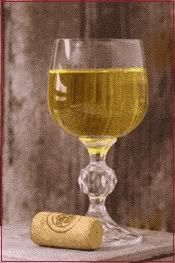
White Wine, Anyone?


Ah, the Christmas/New Years syndrome—the time when a lot (myself included) feel as though we've inadvertently stepped through Alice’s looking glass; Christmas filled with looking back and New Years filled with looking forward. With the timing of these polar opposites a mere week from each other, is it any wonder we sometimes feel as though we're at odds with ourselves?

I’ve always loved Christmas and disliked New Years for the same reason: memories. I have very fond memories of Christmas. Of the lights and the tree and the family togetherness. Of my dad’s potato dressing, and dumping water on the middle sister, at the urging of my eldest, to get her out of bed before noon. Of the spontaneous dances that broke out in the kitchen and the spontaneous singing that broke out in the living room. That my sisters are eleven and ten years older than me might have a lot to do with why those memories are so very precious. By the same token, I have no fond memories of New Years. Not a one. The family would be long gone by then, the best-laid plans fallen through, as always; New Years Day dinner the only redeeming feature of yet another buildup turned disappointment. All the wishful thinking in the world will not change one's life. Only we can do that. And the proof? Out of the bazillions of resolutions made aloud on January 1st, how many will actually come to fruition? (Here’s a hint: most, if not all, will fall through in the first month.) If you want to be a better person, loose weight, go back to school and earn that degree you‘ve wanted, laugh more or give of yourself more, then go for it, that‘s what I say; don’t wait for a special occasion.

As for me, I’ll have a nice glass of white wine and go to bed by ten. It is, after all, just another day.

Saturday, December 23, 2006

Friday, December 22, 2006

"A taggin' we will go, a taggin' we will go, hi ho the dairy-o a taggin' we will go."

The following is Sylver's (One More Day) fault.

...'Tis The Season

Favorite seasonal movie? In keeping with tradition and in no particular order… A Christmas Carol (b&w w/Alastair Sim), White Christmas, Scrooged, A Christmas Story. And on New Year’s Eve, It’s A Wonderful Life.

Song you most enjoy this time of year? Jingle Bells, Walking In A Winter Wonderland.

"Holiday Greeting"? Merry Christmas.

Decorate, inside? outside? Both. But not in a “Las Vegas” sort of way.

Do you make a list? If so, how many people are on it? No, I don’t make a list.

How up to the last minute do you shop? When the stores throw me out and not one moment before! Seriously, it’s the 22nd today and I’m still not finished. I think that says it all.

When do you open your gifts? Christmas morning

Holiday food you most savor? My dad’s famous potato dressing which, unfortunately, he never wrote down. Though many have tried to duplicate it over the years, all have failed miserably, myself included.

Favorite holiday book? The Night Before Christmas. (?)

New Year Resolutions? I don’t make New Year resolutions. I just hope a lot. :)


If you have read this in whole or in part, consider yourself tagged.

How To Turn a Bed-In-A-Bag Into a Fruitcake

Remember the old fruitcake joke?--the one where everyone gets it, feigns being thrilled, then tosses it into the freezer only to give it back to the giver next Christmas? Well, the same can be said about anything, really. Even a bed-in-a-bag.

“Go into my closet, take out my never-used bed-in-a-bag and put it under the tree. It’s yours, with lots of love.”

That’s what my mother just finished telling me. And with it, I’m not at all sure if I should be concerned, miffed, or grateful. Not that my mom is having financial trouble (she isn’t). And not that I dislike the bed-in-a-bag (I do like it; I should - I was, after all, the one who gave it to her last year). I just can’t help thinking that this former-present-turned-present-again is likely going to make the proverbial fruitcake rounds for many years to come.

I wonder if it will fit in the freezer…
Related Posts Plugin for WordPress, Blogger...